e12: Okay, but how do birds stay warm?
LISTEN OR WATCH ON:
Release Date: February 26, 2026Winter isn’t just “cold” for a bird, it’s a nightly survival math problem: generate enough heat, lose as little as possible, and don’t get eaten while you’re fueling up. In this episode, Scott is joined by Dr. Maria Stager, UMass Amherst, to break down the clever physiology and weird little behaviors that let birds ride out freezing temps, from icy duck feet to “feather puffball” mode to energy-saving torpor.
-
In this episode, you’ll hear about:
How birds keep their feet from freezing
How feathers and shivering muscles act like a built-in winter jacket
How birds manage energy overnight, including fat, roosting, and torpor
-
00:00 - Surviving Extreme Cold: The Resilience of Owls
01:55 - Understanding How Birds Stay Warm in Cold Weather
11:16 - Physiological Adaptations of Birds to Cold
18:26 - The Impact of Climate Variability on Bird Adaptations
23:33 - Bird Adaptation to Cold Weather
28:41 - Birds and Body Temperature Regulation
Timestamp Disclosure
These timestamps were generated using AI and may contain errors or omissions. They are provided for accessibility and reference purposes only and may not perfectly reflect the original audio. -
Dr. Maria Stager (Excerpt)
A lot of our big owls, like snowy owls, you know, you hear that they can survive temperatures down to negative 80 degrees Fahrenheit, which is cold.Dr. Scott Taylor
That's crazy.Dr. Maria Stager
Very cold. Really? That's what I read. I don't know who's out there measuring the temperature when it's negative 80. And, like, bird watching, they're dead.Dr. Scott Taylor
Have you ever been really cold? Like, I can't feel my feet.Dr. Maria Stager
Cold.Dr. Scott Taylor
My face feels like it's freezing cold. I'm never going to feel warm again.Dr. Maria Stager
Cold.Dr. Scott Taylor
When I was first learning how to ice skate, that was a weekly experience for me, especially my feet.By the end of a skating lesson, my toes were little popsicles, And I remember my dad sometimes helping to warm up my feet with his what then seemed to me giant hands after I got off the ice.
And though I loved being on the ice, the cold feet that went along with the early stages of learning how to ice skate were uncomfortable and something I dreaded.
Cold feet was also the most common complaint from the kids I eventually taught to skate, which is why there's one winter scene that always reminds me of my frozen skating toes.
A duck standing on the ice, not pacing, not hopping, not doing the human thing where you pretend you're fine while your body is quite quietly calling for help, just standing on the ice. Calm, like frozen ponds are a totally normal place to hang out barefoot.
And every time I see it, even though I know what's going on now, my brain does the same thing.
Dr. Maria Stager
Brr.Dr. Scott Taylor
Because if you and I tried that, we'd last about 12 seconds before we started panicking. Ducks and geese on ice.Chickadees turning into little puffballs, tiny birds that weigh less than a few nickels, making it through nights where the air itself feels sharp. So today's episode is about that mystery. Okay, but how do birds stay warm? And I don't mean the vague they have feathers answer.
I mean, what are the actual moves? What's happening inside their bodies? What choices are they making?
And what does it cost to stay alive when you're a small animal with a high body temperature living in a world that's trying to freeze you?
To help us answer that question, I'll be joined by Dr. Maria Steger, an assistant professor at the University of Massachusetts Amherst who studies how birds cope with cold, how they generate heat, how they keep it, and how flexible they can be when winter throws them curveballs? And here's what I can promise you. The answers are amazing. We'll start with the duck feet question, because it's the One on everyone's mind.
But the story gets weird fast. Like, what if the whole point isn't keeping the feet warm? What if the feet are doing something totally different than you assume?
Then we'll go bigger. Birds don't just get through the cold. Some of them turn their bodies into heat machines. Some of them change how they insulate themselves.
Some of them change how they behave. And some of them do something that sounds like science fiction the first time you hear it.
They can temporarily run their bodies differently at night to save energy. We'll also talk about the parts of birds you don't think of as temperature tools. And then we zoom out to the modern world.
Because winter isn't just cold, it's unpredictable.
We're seeing weird extremes like polar vortex events hitting places and seasons that aren't prepared for them, and that can be catastrophic for the wrong bird at the wrong time. Especially birds that rely on food sources that simply disappear when it freezes.
So today we're going to explore the physics, the biology, the behavior, and the survival math that lets birds stay warm and why some birds are better built for weird winters than others. Because the next time you see a duck standing on ice, I want you to have a new thought. Not just, how are you doing that?
But, oh, you've evolved to do this. After the break, Dr. Maria Steger helps us unpack how birds survive when everything around them is frozen. Stick around. Welcome back, everyone.
Thanks so much for joining us today. I'm really excited to chat with you, Maria.
Dr. Maria Stager
Thanks for having me, Scott.Dr. Scott Taylor
Yeah. So I thought we could start off by, I think, a question a lot of people have wondered, which is this. You see ducks and geese standing on the ice.You and I would struggle with that. It would be painful, and we would lose a lot of body heat. So what's the deal with waterfowl and their legs?
Dr. Maria Stager
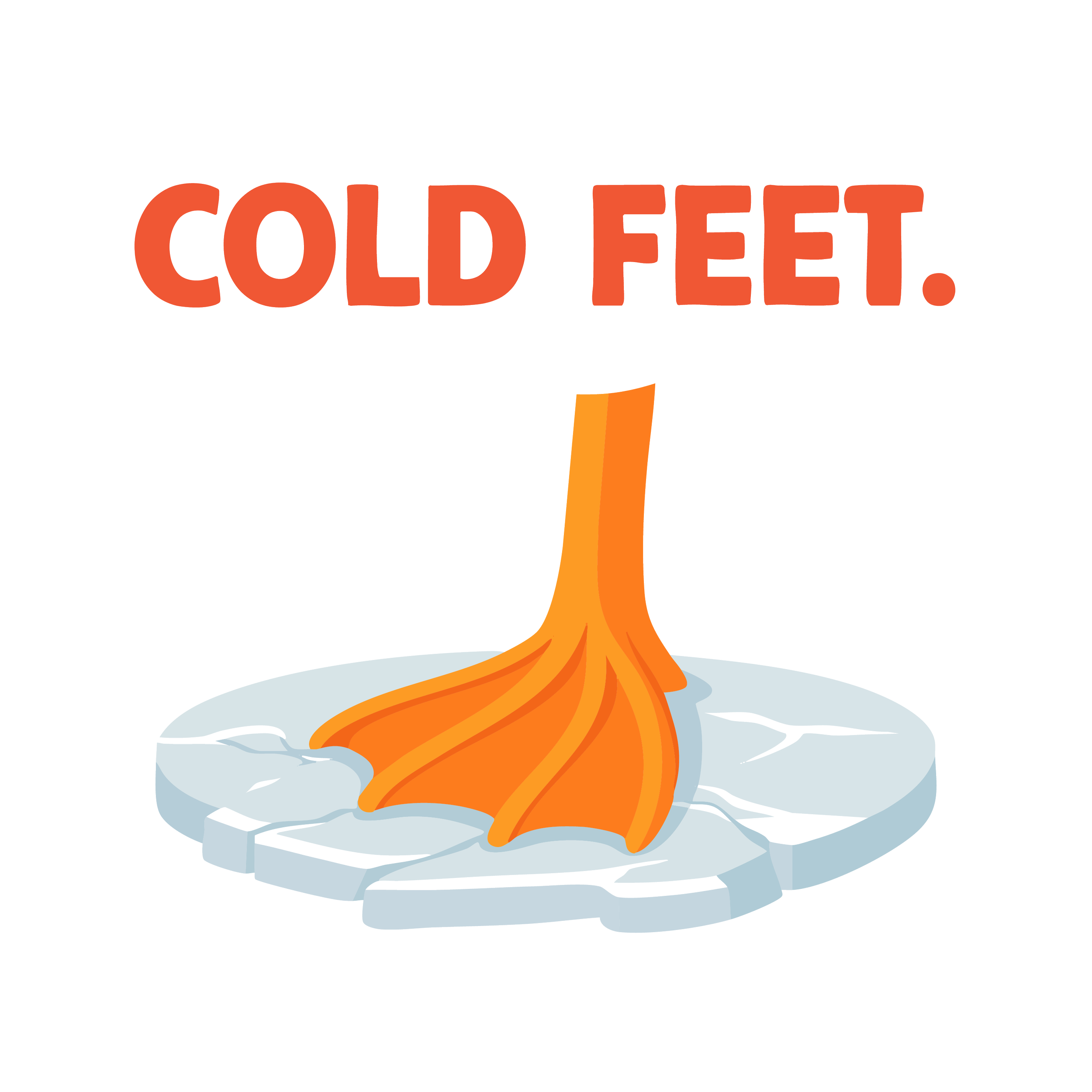
Yeah, that's a great question. So birds in general, not just waterfowl, have what's known as countercurrent heat exchange.And so this is a principle from physics where if there are two fluids that are moving past each other in opposite directions, heat can be transferred from one to the other. And so what birds do is they have blood vessels that are really close to each other, and blood is traveling in opposite directions.
So they have arteries carrying blood from their heart down to their feet. That blood is really warm. And then they have veins that are carrying blood from their feet back towards the heart, and that blood is much cooler.
And by putting those two blood vessels really close to one another, they can transfer heat from the artery to the vein. And so by the time the blood gets to the foot, there's a lot less heat that is going to the foot. And in this way, they can actually conserve heat.
And so in a way, their foot ends up being much colder. But a lot of birds don't have much tissue in their legs or their feet.
And there's not a lot of cells with a lot of fluid in there to freeze, just these tendons and these bones. And so that makes them less prone to frostbite, for instance.
The final thing is that we think that birds just have fewer pain receptors in their feet than do you or I. And so these pain receptors are just a special kind of neuron that allow us to sense pain.
And if we have fewer of them, we might be less sens to that pain overall.
Dr. Scott Taylor
Yeah. So birds have cold feet, and that's on purpose. And it conserves heat in their body, which is really cool. I didn't know about the pain receptor thing.I would have appreciated that.
I was a figure skater as a kid, and my biggest complaint was that my feet got way too cold, especially when I was a little kid who wasn't actually doing much on the ice, as it were.
When we see birds legs and we think about how cold they must be, they actually are cold, but they're retaining heat in this really special way using countercurrent heat exchange. What are other ways that birds stay? You know, a lot of them leave for the winter, so those migrants don't have to deal with the cold.
But we'll come back to that later based on some of your recent research and their, their ability to tolerate cold. But for the birds that stay and, and winter in places that are cold, what are their other strategies for staying warm?
And how similar or different are those things to, like, how you and I try to stay warm?
Dr. Maria Stager
There's a lot of physiological strategies and then there's also behavioral strategies. And I'm a physiologist, so. So I'm gonna start with the physiology. So the biggest thing that birds do is that they shiver, just like you or I.So when they get really cold, they start shivering, and they're really good at shivering. So they use that really big breast muscle that they have, and they can just move it really quickly to generate a lot of heat.
Another thing that they do is just the composition of their feathers. So feathers are really good insulators. That's why we use them in our blankets and our coats.
Dr. Scott Taylor
We steal them for our own insulation.Dr. Maria Stager
Ye, exactly. They're excellent at creating this barrier between the bird and the environment to trap warm air.And then each of those feathers at the base has a tiny little muscle that allows the bird to raise that feather or lower that feather. And so on a really cold day, you'll see that birds look especially fluffy. Sometimes they can even look round, like if you've ever seen a chickadee.
And it's like a ball because they have all of those muscles erecting those feathers and creating this really large barrier around them to trap heat.
Dr. Scott Taylor
Yeah. And it's interesting to think about the feathers because I think a lot of people contemporarily associate feathers in birds, which makes sense.Birds are the only creatures on the planet that have feathers. But we also tend to think then feathers are directly associated with flight.
And it's more likely that feathers were initially this thermal regulation or insulatory thing that evolved and then secondarily became important for flight, which is, uh, yeah, cool to think about. They're very good insulators, for sure, in the context of shivering. So you're talking about the fact that birds have these large pectoral muscles.
And I think it's important to point out, like to folks listening, that birds have gigantic pectoral muscles. Even the most basic bird that you wouldn't assume, like, not a. A turkey that we've bred to have big peck mussels so we can eat them.
Or the breast muscles, like the proportion of a human's body that is muscles is quite small actually. Even like for a bodybuilder, the overall proportion is small. But for the average bird, the pectoral muscles are like up to 40% of the body mass.
Right. So we're talking like these gigantic muscles.
Dr. Maria Stager
Yeah, they can also use muscles in their legs and in their wings as well. But the principal heat is coming from that pectoralis muscle because it's so large.Dr. Scott Taylor
And it's cool that, like, it's large in part. Well, mostly because of flight. But then there's this amazing ability to use it to generate heat and survive cold temperatures. Yeah.So, okay, if heat's coming from shivering in birds and then being retained using the feathers, what is the cost of that? Like, on a typical day, you know, a chickadee is what, 10 to 12 grams? It has to maintain a body temperature slightly higher than you and I.
So what's the, like, metabolic cost given that you're, you know, let's get into the physiology of it.
Dr. Maria Stager
Yeah. So birds spend a lot of time eating when it's cold out if you have a bird feeder, you probably noticed this, right?Like they are out there all the time eating and on cold days they need to stock up for their night. So you will see birds feeding and some species do this later than others. You'll see them feeding at the very end of the day.
Sometimes, just as it's getting dark, I'll still have a couple cardinals out and they'll be packing on fat so that they can generate heat all night long.
And it's really a balance for birds between how much time they're going to spend eating and exposing themselves potentially to predators while they're at those feeders and how much energy they think they might need to survive that night. Because they don't really know how cold it's going to get or how much fat they're going to burn.
Because I should mention that birds are principally using fat when they're shivering. So they're really good at using up fat overnight.
And so there has been some work showing how exactly how much fat they need to put on overnight depending on the temperature that they're exposed to the next day. And it's quite a bit.
So it can be grams, like you're saying a chickadee that weighs 10 grams might need to put on whole gram before going to sleep at night. And if they get it wrong, like the consequences are really serious.
So they might not wake up in the morning if they didn't pack on enough fat to stay warm overnight.
Dr. Scott Taylor
That's also why you see kind of a flush of feeder activity right away in the morning because they're all like trying to restock. Yeah, yeah, exactly.It's amazing the kind of the knife's edge that a lot of these birds live on because they have to put on fat, but not so much fat that they can't fly because then they'll be consequences for that. Obviously in terms of predator avoidance.
Dr. Maria Stager
I mean, this is one of the things that interests me most about animals is their ability to adjust to these changing conditions and for temperature. With birds, they're making a lot of changes across different levels of their body.So the ability to shiver more when it's cold comes from changes that are happening within the muscle, but also changes that are happening within their digestive system and within their cardiovascular system.
So one thing that I found, and others have found this too, is that a lot of birds can increase the size of their heart when they're exposed to cold temperatures. And this can happen in a matter of days really.
So dark eyed juncos, which I spend a Lot of time thinking about they increase the size of their heart by 25% in as little as a week when you expose them to really cold temperatures. And that would be a really bad thing in a human. Like, having cardiac hypertrophy is generally not good for your health.
But birds seem to be able to flexibly change the size of their heart quite a lot. They're also making changes to their digestive tract that allow them to eat more food.
So growing the size of their gizzard or stomach in their intestines and often increasing the efficiency of the intestine to actually extract nutrients from their food. And then we also see changes at the cellular level in the muscle.
So some birds not only grow the size of their muscle in the winter, so a lot of them make that pectoralis larger, but they'll actually change the muscle cells so that oxygen can diffuse more efficiently. Or they might increase the number of blood vessels, capillaries that are feeding that muscle to get oxygen and fuels to that muscle more efficiently.
Dr. Scott Taylor
That's really cool.I mean, I think we tend to think as humans, like, our bodies don't change that much past a certain age unless we're like, I'm going to bulk up and put on a lot of muscle mass. And that takes them time, maybe more effort than we would like at, you know, especially in our 40s.
It's amazing to think about how, like, malleable or reactive to the environment organ systems are in birds like you just described, changes to heart, which would be impossible to imagine in humans unless you were in some insane disease state, like end stages of that disease, or like your GI system, like enlarging and changing the way it's absorbing nutrients. And so such a rapid response to cold is super fascinating.
Dr. Maria Stager
I agree. Yeah. I think that there are mammals that can do some of these rapid changes as well, but I think birds and reptiles are especially good at it.So these changes in the digestive tract are very similar to pythons, which are the example of not eating for months. They totally reduce the size of the digestive tract, and then within 24 hours, they can regrow the whole thing.
Birds aren't doing it quite at that level, but they're still pretty impressive.
Dr. Scott Taylor
Yeah.Dr. Maria Stager
But birds also have a couple other strategies for handling these really cold temperatures, and chickadees are a great example of that. So if they can't put on enough fat, then they might instead choose to drop their body temperature.So stay, stay cooler than you might expect overnight. And this allows them to then save energy and in the morning, then they have to use a little bit more energy to warm up than they otherwise would.
But overall it could be an energy saving strategy for them.
Dr. Scott Taylor
And that's called torpor, right?Dr. Maria Stager
Yeah, yeah, it's called torpor. So poorwills can go into torpor for like three days at a time and then they'll actually stay inactive for up to 45 days.So really in those 45 days they'll like come out of the torpor and go back into the torpor. And there was a recent study that showed that they often find places to roost that are exposed, but they'll face sunlight in like the late afternoon.
And that'll help them warm up out of these torpor bouts sort of naturally with the sunlight. And if they shaded the bird, then they had more trouble coming out of those torpor bouts.
Dr. Scott Taylor
I had no idea.Dr. Maria Stager
That's like the only example of hibernation in birds that I'm aware of. I mean, I think juncos are amazing. So on the coldest mornings you still see them active at your bird feeder. And that's true of a lot of birds.But sometimes I think there are some birds that sleep in a little bit maybe because they're taking longer to wake up and drunkards are always out there and they're all over the place. So some of them are wintering in our southern states and some of them are wintering up into Canada.
So I think they're a really good example of sort of differences in cold tolerances within the single species, which is why I study them. One thing that you don't see juncos doing that some birds do do. And I've always been interested to find a junco is like, what do they do at night?
Right. So when it's really cold at night, it's hard, it's hard to find birds in the dark. And we don't really know where a lot of birds spend their time.
So there have been some studies showing that, like kinglets, which are our tiniest winter bird here in North America, they can overwinter at really cold temperatures and they'll often huddle together to stay warm at night, which must be adorable if you like a little ball of golden crowned kinglets. And then there are some birds that make snow caves. So things like ruffed grouse and ptarmigan will dig this little cave in the snow.
And when they're in the snow, then it can actually be warmer than it would be in the outside temperatures. And they're not the only ones.
So red bulls can also do this, they'll dig these little tunnels and they can be kind of long and that helps protect them. And so I've always wondered, like, where are the juncos at night? Are they just like roosting in a bush together or where are they? And I have no idea.
Dr. Scott Taylor
Yeah, well, yeah, if anyone is listening and has ever seen juncos at night, let us know.I mean, the chickadees that we study, sometimes, like when you go to check nest boxes and clean nest boxes, you can either find them in there roosting together or see the evidence that they were roosting, which is like their poops, which is pretty cute.
Dr. Maria Stager
Yeah. When I used to study tree swallows, same thing. Like on a cold night, you would find multiple individuals together sometimes.Dr. Scott Taylor
Yeah.I guess that brings up the broader question that, like, you know, these are birds that have evolved in some places or locally adapted in some places to be good at flexibly adjusting to their environment. And in other places where the environment isn't as variable, they have less of that ability. But kind of predictions are that variability is going up.
Right. So, like, how do you think about that in the context? I mean, we can talk about juncos, but I know you've worked on other birds as well.
This less predictable winter, what that's going to do to some of these patterns you've been finding.
Dr. Maria Stager
Yeah, So I think it's. I think some birds are going to fare better than others. So. So I think.I actually think juncos are going to be just fine because I think they're really good at responding to these temperature changes.
But other birds that don't experience a lot of variation in temperature, I think are going to have a harder time dealing with some of these weather events that we're experiencing. And so I think a really good example of that are the polar vortices that we've been experiencing in North America.
So this is where this really cold arctic air comes down and it can dip pretty low into the lower 48 in places that often don't receive these cold temperatures. And so this happened this winter, but it also happened a few years ago when there was that great Texas freeze.
And you'll remember, like the news and social media was just inundated with pictures of Texas and Louisiana, that Gulf coast region covered in ice, people without power, huge crop destruction and livestock destruction. And a lot of birds also died during that event.
So we found that purple martins, which are a breeder across North America, they overwinter in Brazil and then they come back to the breeding grounds fairly early in that area. So in the Gulf coast region, they'll get back in January or early February and set up shop. And they mostly make use of human provided houses.
So you might have seen these big white gourds and nest boxes. And they nest often in these communal groups, so you'll see many of them together.
And so all these birds had arrived back to Texas and Louisiana in January, and then this great Texas freeze hit in early February and it killed hundreds of purple martins. And we think that that's because they're just not used to these cold temperatures. They wouldn't ever experience them.
So they usually avoid them by being in Brazil. And then by the time they get back, things are starting to warm up and so they don't ever get these winter storms.
But with climate change, these polar vortices are bringing those storms in later in the season and they're hitting further south than they might otherwise have done. And so it can have really large consequences on these bird populations.
Dr. Scott Taylor
Yeah, it makes sense that these birds that experience cold weather, like juncos, and experience variably cold weather across their whole range would have some ability to adapt and adjust to these.But yeah, for these aerial insectivores or tropical species that just in theory should be timing their life events to avoid a polar vortex wouldn't fare so well in, in the presence of one. And yeah, I guess my understanding of the polar vortex and its increasing frequency is the instability or increasing instability of the jet stream.
Right. It allows this really cold Arctic air to blast south because the jet stream is weakening. I'm pretty sure.
Dr. Maria Stager
Yeah. And I. And that was a good point, that purple martins are aerial insectivores, meaning that they eat insects sort of exclusively.And so when it's really cold and snowing, there are not a lot of insects flying. And so it doesn't seem like something that they're going to be able to adapt to in the future.
The insects just aren't going to be out, so they won't have any food. So I don't really see them overcoming this problem. No.
Dr. Scott Taylor
Yeah, that makes sense.Especially like, even if they, even if they could shiver enough to stay warm, there's nothing to power the shivering because they're not gonna diet switch and just like show up at our feeders and eat seeds. Yeah.
Dr. Maria Stager
In the Northeast, where we. Well, we've had a really cold, snowy year.That hasn't been the case over the last few years, so we've been getting slightly warmer, but wet winters, so It'll be like 40 and raining. And I think that also has consequences for the birds.
So the feathers, the insulation that we were talking about works best when those feathers are dry and they can stay nice and fluffy. So if it's raining all the time, that insulative property is not as effective.
And so folks in my lab are also looking at how these warmer winters might influence energetics of our winter communities as well.
Dr. Scott Taylor
Yeah, I mean, it's a very good point. You assume, okay, it's warmer, maybe they'll do better, but not if the insulin of the capacity of their feathers is also reduced.One thing I'd be really curious to hear more about is, you know, since you started your journey as a avian physiologist, thinking a lot about cold tolerance and adaptation to cold, what are some of the most exciting findings that have come out or what are you really excited about exploring?
Dr. Maria Stager
I think one of the most exciting things that have come out is just how low bird body temperatures can go. And so thinking back to torpor, which again is this state of inactivity that some birds can go into.And in this state they drop their body temperature, they drop their metabolic rate, they drop their heart rate. And there's been work done in Andean hummingbirds.
So hummingbirds that exist at mid to high elevation in Peru, there's one species called, called the black metal tail. And it can drop its body temperature down to about 3 degrees Celsius, which is like, wow, 38 degrees Fahrenheit, which is cold.
Dr. Scott Taylor
That's cold.Dr. Maria Stager
Yeah. And so that's, that's the coldest that we know of a bird going, which is just mind boggling to me because I don't, I actually hate the cold.I think that's why, I think that's why I study whole adaptation in birds is because I'm just so fascinated by how they deal with it. And I like to watch them from inside the comfort of my warm home.
And the idea that if I'm outside and it's 38 degrees Fahrenheit, I'm pretty uncomfortable. Just my feet, like you were saying, I don't have any blood flow down there. My face gets really cold.
And the fact that birds could do that internally is mind boggling.
Dr. Scott Taylor
Yeah, no, that's crazy. I should clarify. I like cold weather, but I like being prepared for it.So if I'm outside in the cold, I want to be warm, you know, with my parka or whatever. It's funny though, when I. Yeah, exactly, exactly. Very, very good insulation.
So let's talk a little bit about some other strategies or behaviors for staying warm. We often see birds just standing on one leg, one, like, kind of tucked up into their feathers. The other one they're standing on can.
Do we know anything about, like, whether that's something to do with staying warm?
Dr. Maria Stager
Yes, it is.So in the winter, I think birds definitely do that to stay warm, and you'll see them sort of sitting on their feet a lot more, which makes it really hard if you put bands on those birds so that you could tell which individual was which. They love to sit on their feet when it's cold, so. So definitely tucking that foot up into their feathers helps to keep them warm.
There's other things that they can do to reduce heat loss, too. So in addition to the countercurrent heat exchange, they might reduce blood flow to certain areas. We can do this too, right?
Like, if it's really cold out, then we tend to have less blood flow to the surface of our skin. Whereas if it's really warm and we're, like, exercising, we want to shed that heat.
We can increase the size of those capillaries and shed heat from our skin surface. So birds can do this too, and they tend to do it in the places that are exposed. So the bill is a great example.
You don't really think of a lot of blood vessels being in the bill, but there are some. And so in the cold, they might close those blood vessels. Same thing with other exposed skin, like around the eye or any place they have exposed skin.
Dr. Scott Taylor
Yeah.I think most people probably have never thought about the fact that there are blood vessels in a bird's body, because it seems like such a stationary.
I think maybe people think about it like our fingernails or something like that, but it's a much more dynamic piece of a bird's body or part of a bird's body than we think. So it makes total sense that they'd shunt hot blood from going out to this thing that clearly cools down easily.
It has no feathers on it, but I'd never really thought about that.
Dr. Maria Stager
A lot of our big owls, like snowy owls, you hear that they can survive temperatures down to negative 80 degrees Fahrenheit in the winter, which is cold.Dr. Scott Taylor
That's crazy.Dr. Maria Stager
It's very cold. Really? That's what I read. I don't know who's out there measuring the temperature when it's negative 80. And, like bird watching, they're dead.But I also think that it's more impressive. Like, those are big birds, right? I think it's more impressive that little birds can do it.
So if you just think about sort of the laws of thermodynamics. Larger animals, larger birds are going to lose heat at a slower rate than our small birds. It's just surface area and volume.
And so small birds that can survive really cold temperatures are just really good at insulating and producing heat. And I think the Red Pole is another great example of that.
So, yeah, they can withstand temperatures of negative 60 degrees Fahrenheit, which is still very cold. That's unpleasant. That's so cold.
Dr. Scott Taylor
Yeah. And redpolls are tiny little birds that. Yeah, that's amazing.I was thinking about like these small arctic passerines that like you say they have the wrong surface area to body ratio to retain a lot of heat. So they've got to have all these strategies to really persist. But minus 60 Fahrenheit. Wow. Yeah. Again, who figured that out?
Couldn't wanna do that field work.
Dr. Maria Stager
Fairbanks, Alaska. That's my guess.Dr. Scott Taylor
Yeah.So we reached the part of the show that we call that's BS or that's bird stuff, where we give our guests an opportunity to debunk a myth that ruffles their feathers. So Maria, what do you want to call BS on?
Dr. Maria Stager
Well, I guess I learned birds were warm blooded and that meant that they maintained a constant body temperature. And that's what we think we do as humans. Right. 98.6 degrees Fahrenheit. That's where we're staying.But the more we look, the more we find that birds are actually able to vary their body temperature. It's not just the ones that can drop down to 3 degrees and go into torpor.
It seems like birds can both raise and lower their body temperature pretty frequently. So anytime they want to save energy, really, it can be used in that way.
So just dropping their body temperature a few degrees could help them save energy in the cold. And similarly, when it's really warm out, they might raise their body temperature a couple degrees instead of wasting energy shedding heat.
Dr. Scott Taylor
Ah, cool. Yeah, that's, that's an awesome bs. I mean, I think we hear these terms warm blooded and cold blooded and they're, they're too generalized for sure.Since like, yeah, a turtle in the sun has a warmer body temperature than you or I do. And a, a bird in the cold might lower their body temperature. I love that. Great. Well, thanks so much for joining us.
It's been really awesome to chat with you today and I appreciate you taking the time.
Dr. Maria Stager
Thanks for having me, Scott.Dr. Scott Taylor
Birds are dinosaurs and around here we like our snacks. So we end each episode with a dinosaur nugget. Today's nugget is birds are remarkably flexible winter athletes. They don't just rely on feathers.They dynamically adjust their behavior, muscles, metabolism, gastrointestinal system, and even body temperature to survive the cold, constantly fine tuning their physiology as conditions change. That's a wrap on this week's episode. Okay, but how do birds stay warm? If you like this episode, leave a comment like follow and subscribe.
We'll catch you next time. Byeeee. Okay, But... Birds is hosted by Scott Taylor with production and creative by Zach Karl.
Transcript Disclosure
This transcript was generated using AI and may contain errors or omissions. It is provided for accessibility and reference purposes only and may not perfectly reflect the original audio. -
All audio, video, and images in this episode are either original to Okay, But... Birds (© Okay Media, LLC) or used under license/permission from the respective rights holders. Bird media from the Macaulay Library is used courtesy of the Cornell Lab of Ornithology as follows:
Dark-eyed Junco audio contributed by Wil Hershberger, ML94361
Purple Martin audio contributed by Arthur A. Allen, ML8086
Willow Ptarmigan audio contributed by Leonard J. Peyton, ML50031
Common Poorwill audio contributed by Wil Hershberger, ML191125
Snowy Owl audio contributed by Gerrit Vyn, ML138288
Ruffed Grouse audio contributed by Bob McGuire, ML216783
Mallard audio contributed by Mike Andersen, ML136504
Tree Swallow audio contributed by Bob McGuire, ML233306
Black-capped Chickadee audio contributed by Jay McGowan, ML202239
Redpoll (Common) audio contributed by William V. Ward, ML12745